– Benefits of Commercial Rooftop Units
Why Commercial Rooftop Heating Units Are a Popular Choice for NJ Facilities.
Commercial furnaces are designed to provide reliable, high-capacity heating for large buildings and multi-zone spaces. Modern units combine durability, efficiency, and advanced controls to meet the demanding needs of commercial operations.
- Space-saving design: All components are housed in a single rooftop unit, freeing up valuable interior space for your business instead of mechanical equipment.
- Flexible heating options: Available with natural gas, electric heat, hydronic connections, or heat pump technology to match your building’s needs and efficiency goals.
- Simplified maintenance & access: Packaged, rooftop-mounted systems make access, repairs, and replacements easier and less disruptive than multiple indoor units.
- Optimized for commercial loads: Engineered to handle larger zones and demanding environments like retail spaces, multi-tenant buildings, schools, and industrial facilities.
– Commercial RTU Systems Explained
How Commercial Rooftop Unit Heating Systems Work.
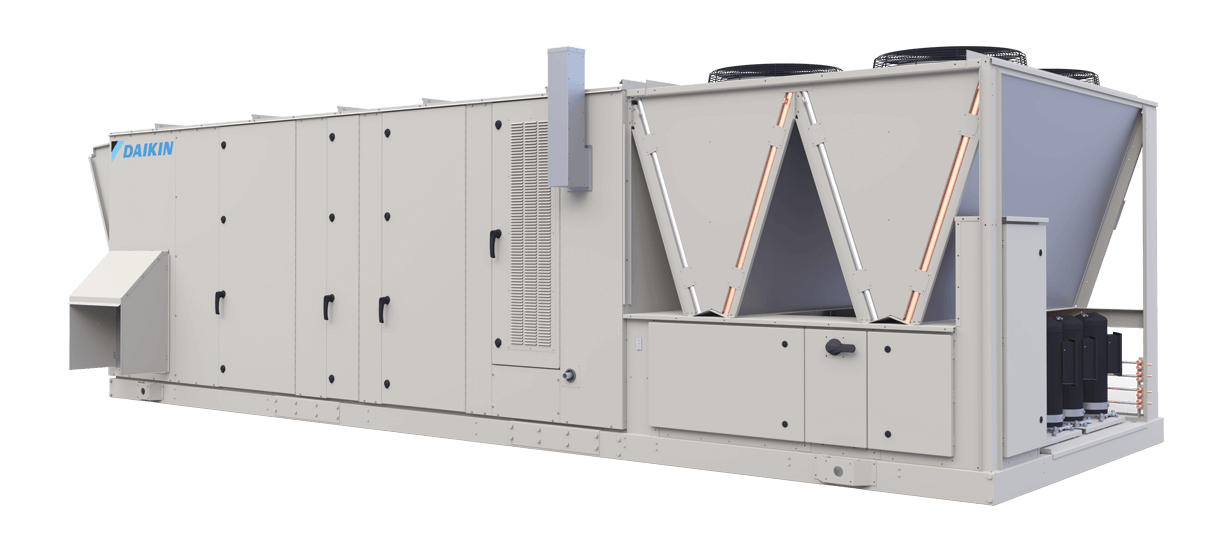
Rooftop units (RTUs) are self-contained HVAC systems that heat and distribute air through your building’s ductwork. Depending on the design, they may use gas, electric, or heat pump heating. Each unit combines heating, cooling, and ventilation into one compact system and is controlled by thermostats or building automation systems for reliable, efficient comfort year-round.
- Self-contained packaged heating systems
- Installed on rooftops to save interior space
- Deliver heated air through duct distribution
- Often combined with cooling and ventilation functions
- Controlled by building thermostats or automation systems
Keep Your Facility Comfortable Year-Round
From installation and replacement to maintenance and repair, EAS has your RTU needs covered.
– Industries That Use RTU Systems
Commercial Buildings That Benefit Most from Rooftop Heating Units.
Rooftop units (RTUs) are a trusted, go-to solution for many commercial buildings. Their packaged design, scalability, and reliability make them ideal for spaces that need efficient, centralized heating and ventilation.
- Retail stores and shopping centers
- Office buildings and business parks
- Restaurants and hospitality spaces
- Warehouses and light industrial buildings
- Schools and municipal facilities
– Jersey Shore Rooftop HVAC
How Coastal New Jersey Conditions Impact Commercial Rooftop Units.
Commercial rooftop units at the Jersey Shore face a more demanding environment than identical equipment installed inland — and the heating season adds specific considerations on top of the salt air and coastal exposure issues that affect cooling performance year-round.
- Salt air corrosion on heating components — gas heat exchangers, burner assemblies, ignition systems, and electrical components on rooftop units near the coast are exposed to salt-laden air that accelerates corrosion. Heat exchanger corrosion on gas RTUs is particularly important — a cracked heat exchanger allows combustion gases to mix with supply air, creating both a safety hazard and a system failure. Annual inspection of heating section components is more critical at the Jersey Shore than at inland locations
- Wind exposure and heating performance — coastal locations experience stronger and more consistent wind than inland sites. High winds across rooftop equipment affect gas burner performance and increase heating load on the building envelope simultaneously. Proper RTU orientation relative to prevailing coastal winds and adequate curb height are important installation considerations for Jersey Shore commercial properties
- Heat pump RTU considerations for NJ winters — heat pump rooftop units offer significant efficiency advantages over gas heating in mild weather but require evaluation for NJ winter conditions. Modern cold-climate heat pump RTUs perform well down to lower outdoor temperatures than older models, but hybrid configurations — heat pump with gas backup — are often the most practical choice for Jersey Shore commercial facilities that need reliable heating through NJ's coldest weeks
- R-410A phase-out impact on existing RTUs — many Jersey Shore commercial RTUs installed in the 2010–2023 era use R-410A refrigerant for the cooling section. As R-410A becomes more expensive and less available, refrigerant leaks accelerated by coastal corrosion carry increasing repair costs. This factor is worth including in replacement timing decisions for older Shore commercial RTUs
- Seasonal maintenance priorities — pre-heating-season service in fall is particularly important for Jersey Shore commercial RTUs. Summer salt air exposure accumulates on heating section components during the cooling season — a thorough fall tune-up that includes heating section inspection, burner cleaning, heat exchanger inspection, and ignition system testing ensures the heating section is ready before the first cold snap
– RTU Efficiency & System Design
Commercial Rooftop Units Designed for Performance & Energy Efficiency.
Today’s rooftop systems are more energy-efficient and easier to control than older models. With proper sizing, zoning, and system design, they deliver consistent comfort while helping reduce operating costs.
- High-efficiency heating sections available
- Multi-stage and variable-capacity operation
- Economizer and ventilation integration options
- Zoned comfort control capability
- Compatible with building automation systems
– Complete Commercial RTU Services
Commercial Rooftop Unit Installation, Replacement, Maintenance & Repair in New Jersey.
Environmental Air Systems provides complete commercial rooftop unit heating services across the full equipment lifecycle. Each link goes to the dedicated service page with more detail.
- RTU Heating System Installation - New commercial rooftop unit installation for heating applications including load calculations, equipment selection, gas or electric heating section specification, curb design and installation, electrical coordination, ductwork connection, crane coordination for larger tonnage equipment, and full system commissioning. We install Carrier, Trane, Lennox, York, Daikin, and all major commercial RTU brands. Learn more →
- Commercial Furnace Replacement - Evaluation-driven replacement of aging or failing commercial furnace equipment. We assess your current system's condition, efficiency, and repair history before making any replacement recommendation — and we'll tell you honestly if repair is still the better financial decision. When replacement is warranted we manage the full project including permits, disposal of old equipment, and commissioning of the new system. Learn more →
- RTU Heating System Replacement - Evaluation-driven rooftop unit replacement with honest repair-vs-replace guidance based on equipment age, condition, heating section performance, and current R-410A cost considerations for the cooling section. We manage the full replacement project including crane coordination, curb adapter requirements, gas line connections, electrical updates, and commissioning. Learn more →
- RTU Heating System Maintenance- Scheduled preventive maintenance for commercial rooftop unit heating systems covering burner inspection and cleaning, heat exchanger inspection, ignition system testing, gas valve and controls evaluation, filter service, and full heating section performance verification. Annual fall maintenance agreements available with detailed service documentation. Learn more →
- RTU Heating System Repair - Fast diagnosis and repair for commercial rooftop unit heating failures including ignition system failures, burner problems, heat exchanger issues, gas valve diagnosis, controls and thermostat failures, and safety limit restoration. 24-hour emergency service available for commercial clients throughout New Jersey. Learn more →
At Environmental Air Systems, we handle the full scope of commercial rooftop heating unit solutions. Our licensed team ensures your rooftop system is designed for your building’s heat load, layout, and longevity.
Built for New Jersey Businesses
Our commercial HVAC team delivers rooftop heating solutions designed for long-term performance.