Air conditioners don’t usually fail all at once. Most systems show warning signs as they age, and recognizing them early can help you avoid unexpected breakdowns during the hottest days of summer. If you’re noticing any of the issues below, it may be time to consider a replacement.
Upgrading before a full failure gives you more time to plan, explore your options, and choose the right system for your home.
Replacing an AC system shouldn't feel overwhelming or confusing. We start with an in-home evaluation, sending out a technician with years of hands-on experience, not a salesperson, to take real measurements and assess your current system so any quote we give you is actually built for your home. Once your quote is ready, we come back out in person to walk through it with you, line by line, and answer any questions before you decide on anything.
We’ll walk you through everything in plain language so you feel informed and never pressured.
Our Evaluation & Quote Process
You shouldn't have to guess whether to repair or replace, or wonder if the quote you're getting actually fits your home. That's why we built our process around two things: real measurements and a real conversation.
In-Home Evaluation
Before we ever put together a number, we send someone out to your home who has years of hands-on technical experience, not a salesperson working off a script. They walk your space, take real measurements, check your existing system, ductwork, and layout, and look at what your home actually needs to heat it properly. No quote goes out based on square footage alone or a quick guess.
In-Person Quote Review
Once your quote is ready, we don't just send it over and leave you to figure it out. We come back out to your home, sit down with you, and go through it together, line by line. What's included, why we recommended it, what it costs, and anything you're unsure about. You'll never be left guessing what you're paying for or why we recommended it.
We'll help you compare options and choose the cooling solution that fits your needs and budget.
When it's time to replace your existing system, you're not locked into replacing it with the same type of equipment. Many Jersey Shore homeowners use a replacement as an opportunity to upgrade to a more efficient system, switch to a ductless setup for better zone control, or finally solve the cooling problems their old system never handled well. At Environmental Air Systems we'll evaluate what you have, explain your options honestly, and recommend what actually makes sense for your home — not what carries the highest margin for us.
If your current AC system is 12–15 years old, the difference between it and a new system isn't just age — it's a generation of technological advancement. Modern systems are quieter, more efficient, better at humidity control, and significantly smarter than what was available even a decade ago.
If your current AC system uses R-410A refrigerant — which includes virtually all systems installed between approximately 2010 and 2023 — there's an important industry change you should understand before your next service call or replacement decision.
R-410A production and import has been significantly reduced under EPA regulations as part of a phasedown of high-global-warming-potential refrigerants. The practical result for homeowners is that R-410A is becoming more expensive and harder to source. If your current system develops a refrigerant leak, the repair cost is rising — and will continue to rise.
We'll give you a straight assessment of whether repairing your existing system still makes financial sense given your equipment's age and the current refrigerant situation — and we'll never recommend replacement just to sell new equipment.
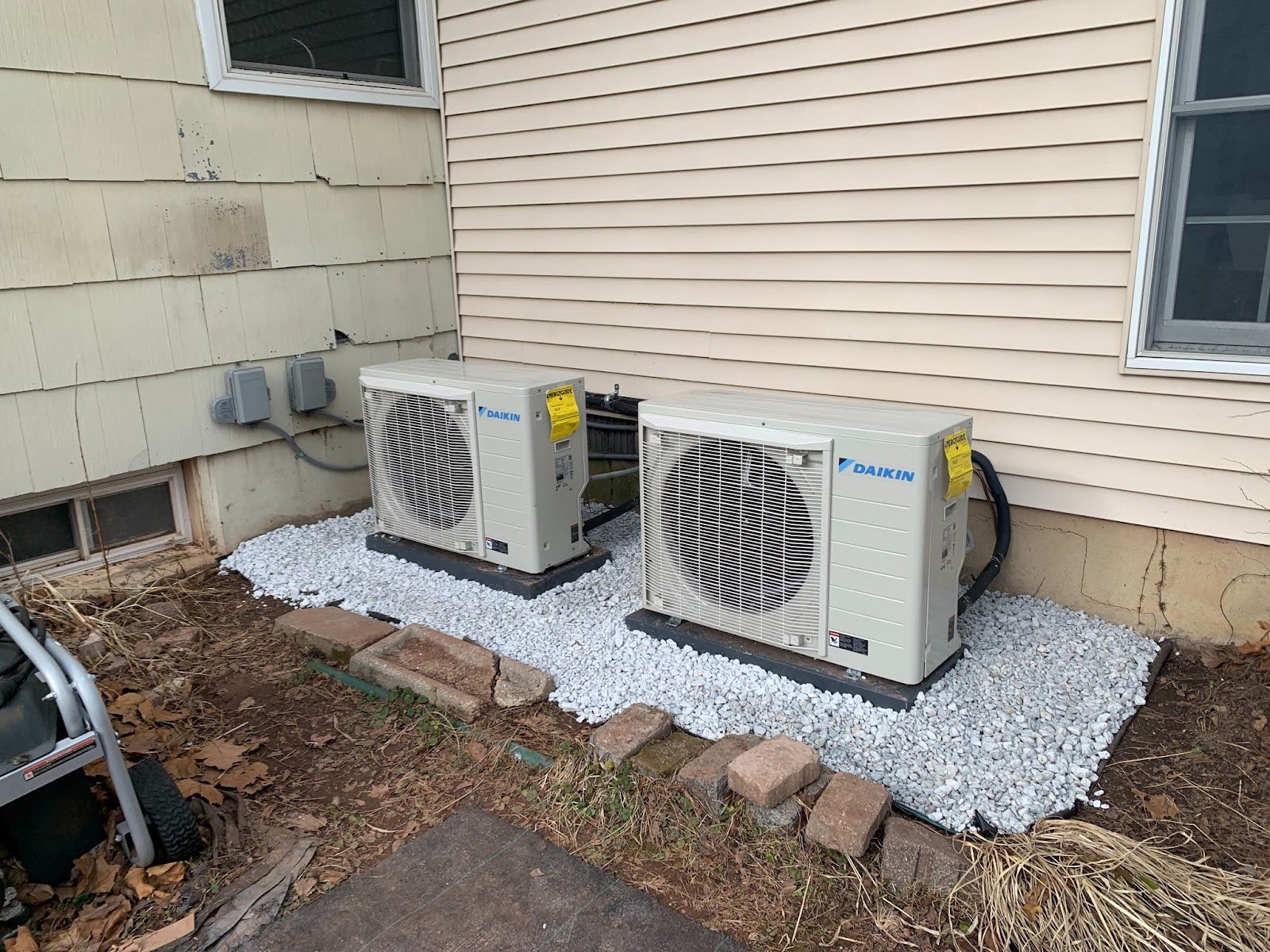
A quality installation makes all the difference in how well your new system performs. Our experienced technicians handle every step with care to ensure safe installation, reliable operation, and long-term efficiency.
We believe home projects should be smooth and stress-free. From your first consultation to the final walkthrough, we treat your home with respect and keep you informed every step of the way.
Environmental Air Systems has been keeping Monmouth and Ocean County comfortable since 1993. We're here to make replacing your air conditioning system simple, honest, and worry-free.
Contact us online or call to schedule your free estimate today.
Have more questions? Give us a call — our team is always happy to help.
View All FAQsA well-maintained central AC system typically lasts 15–18 years. At the Jersey Shore, salt air exposure on outdoor condenser units can shorten this to 12–15 years without appropriate coil protection and annual maintenance.
R-410A is the refrigerant used in virtually all AC systems installed between 2010 and 2023. Federal EPA regulations are phasing down R-410A production due to its environmental impact. The result is rising refrigerant prices and decreasing availability — making service for R-410A systems increasingly expensive. New systems use next-generation refrigerants not subject to the same restrictions. If your system is 10+ years old and uses R-410A, this is an important factor in your replacement timing decision.
Key replacement indicators include your system approaching 15 years of age, escalating repair frequency and cost, R-410A refrigerant leaks given rising refrigerant costs, inability to maintain comfortable temperatures on the hottest days, and repair estimates exceeding 50% of replacement cost.
Sometimes — but it depends on the age and condition of the indoor unit and whether the equipment is compatible. Mismatched components can reduce efficiency and create reliability issues. We evaluate your complete system before recommending a partial or full replacement.
Yes, NJ Utility Company rebates are available for qualifying high-efficiency AC equipment. Federal Inflation Reduction Act incentives may also apply. We identify applicable rebates as part of every replacement proposal.