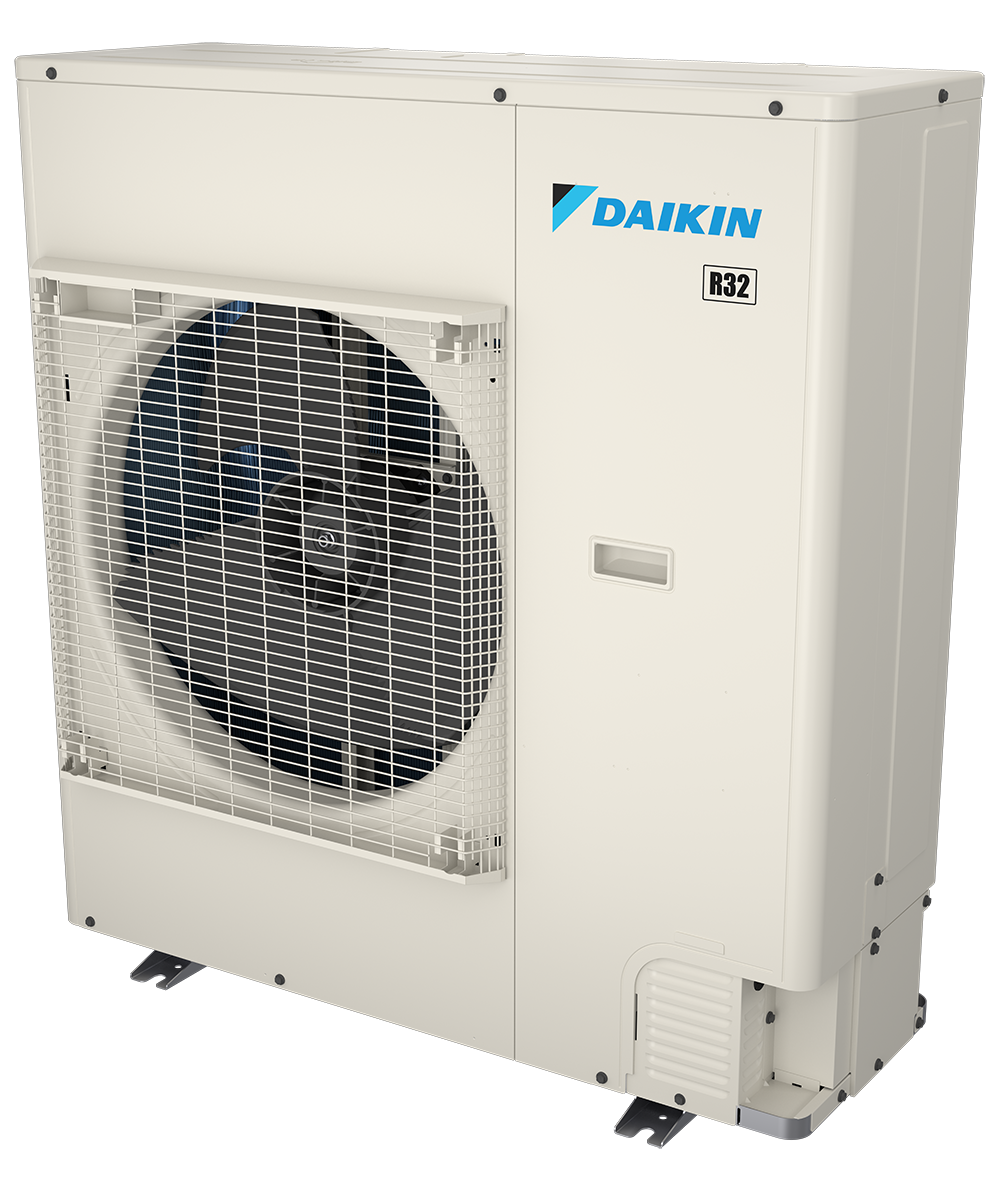
Split systems use an outdoor unit connected to an indoor air handler or coil to deliver heated air throughout the building. Heating may come from a furnace, heat pump, or hybrid configuration depending on the application. By separating components, these systems reduce indoor noise and allow service work to be completed with minimal disruption to daily operations.
Split-system HVAC provides targeted comfort and flexible temperature control throughout your facility.
Split systems are common in buildings that require flexible equipment placement and zoned comfort. They are often used where packaged rooftop systems are not ideal or practical. Their modular design also makes them a strong fit for phased build outs and multi-tenant properties.
Heat pump split systems have become one of the most compelling commercial heating options for NJ facilities — particularly at the Jersey Shore where mild shoulder seasons create conditions where heat pump efficiency advantages are most pronounced.
A heat pump split system uses the same refrigerant-based technology as an air conditioner but runs in reverse for heating — extracting heat energy from outdoor air and delivering it inside. Modern commercial cold-climate heat pumps perform effectively well into low temperatures, making them a viable primary heating source for a significant portion of the NJ heating season.
Why heat pump split systems make sense for many Jersey Shore commercial facilities:
We evaluate your facility's heating load, occupancy pattern, and utility rate structure before recommending any heating configuration — heat pump systems are an excellent fit for many Jersey Shore commercial applications but not every situation.
Proper sizing, airflow design, and zoning strategy are essential to achieving the best performance. Modern split systems offer advanced controls and high-efficiency options that help reduce operating costs while maintaining consistent comfort.
Environmental Air Systems provides complete commercial split-system heating services across the full equipment lifecycle. Each link goes to the dedicated service page with more detail.
At Environmental Air Systems, we design, install, and service commercial split-system heating solutions — from load calculations and system sizing to installation, commissioning, and ongoing maintenance. Our licensed team ensures your system meets your facility’s heating demands, maximizes efficiency and adapts to future growth.
Our team can help determine whether a split-system is the right fit for your building and operational goals.
Have more questions? Give us a call — our team is always happy to help.
View All FAQsA commercial split-system heating system divides heating equipment between an outdoor unit and an indoor air handler connected via refrigerant line sets. Available in heat pump configurations — where the refrigerant system provides heating by extracting heat from outdoor air — and in traditional configurations pairing an outdoor cooling unit with an indoor gas furnace for heating.
Yes, heat pump split systems provide both heating and cooling from a single system. In cooling mode they operate like a standard air conditioner. In heating mode they reverse the refrigerant cycle to extract heat from outdoor air and deliver it inside.
A heat pump split system uses refrigerant-based heat transfer for heating and is most efficient during mild weather. A gas furnace split system pairs an outdoor cooling unit with an indoor gas furnace, the outdoor unit handles summer cooling and the furnace handles winter heating. Hybrid systems combine both for maximum efficiency and reliability.
Heat pump split systems achieve efficiency ratios of 2:1 to 4:1 during mild weather compared to electric resistance heating. Gas furnace split systems achieve 80–96% AFUE depending on equipment specification.
Commercial split-system equipment typically lasts 15–20 years with proper annual maintenance. At the Jersey Shore, salt air exposure on outdoor units accelerates corrosion — more frequent maintenance and corrosion-protective coil coatings extend equipment life meaningfully.